
Acne is one of the most common skin concerns affecting both teenagers and adults. While topical treatments and medication can help control breakouts, many people are left with acne scars, pigmentation, or uneven skin texture that can be difficult to treat.
Laser treatments have become one of the most effective dermatological options for improving acne scars and skin quality. At Dr Haus Dermatology, dermatologists assess your skin carefully to recommend the most appropriate laser treatment for your individual acne concerns.
In this guide, we explain the most effective laser options and how they work.
Laser treatments work by directing controlled energy into the skin. This can:
Laser technology can either remove damaged skin layers or stimulate repair beneath the surface. Both approaches encourage the skin to regenerate healthier tissue.
Because acne scars vary widely, dermatologists usually personalise treatment plans based on scar type, skin tone, and severity. Skin tone helps guide treatment selection, but it does not automatically make someone unsuitable for laser. Patients with darker skin types can often be treated safely and effectively when the right device and settings are chosen.
Fractional CO₂ laser is widely regarded as one of the most effective treatments for moderate to severe acne scarring.
This laser works by creating microscopic columns of controlled damage in the skin, stimulating intense collagen remodelling and new skin growth.
Benefits include:
Clinical studies show that the fractional CO₂ laser can produce 40–60% improvement after one treatment and up to 80% improvement after multiple sessions.
Because it is an ablative laser, recovery time may be slightly longer, but the results can be very impressive for deeper scars.
Non-ablative lasers work beneath the surface of the skin without removing the top layer.
They stimulate collagen and skin repair while causing less visible disruption.
Advantages include:
These lasers are often recommended for milder acne scarring or patients who prefer minimal downtime. Studies show they provide effective scar improvement with fewer side effects.
Clinical research suggests picosecond lasers can achieve significant improvement in acne scars while helping to reduce the risk of hyperpigmentation, including in darker skin types when used appropriately. This is important because laser treatment is often wrongly assumed to be unsafe for skin types 4, 5, and 6.
Not all acne marks are scars. Many patients develop post-inflammatory erythema, which appears as persistent red marks after breakouts.
Vascular lasers target blood vessels beneath the skin to reduce redness and improve overall complexion.
These lasers can be an excellent option for patients whose main concern is red acne marks rather than deep scarring.
There is no single “best” laser treatment for everyone.
The right option depends on:
For many patients, dermatologists recommend combination treatments to achieve the best results.
At Dr Haus Dermatology, our dermatologists create personalised treatment plans based on detailed skin assessment and advanced dermatological techniques.
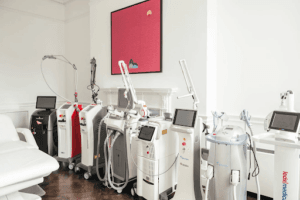
At Dr Haus Dermatology, we are proud to offer a comprehensive range of advanced laser technologies and treatment modalities, allowing us to deliver tailored skin regeneration and optimal clinical outcomes for every patient.
Located on Harley Street in London, Dr Haus Dermatology provides expert diagnosis and personalised treatments for a wide range of skin conditions, including acne and acne scarring.
The clinic combines medical dermatology expertise with advanced aesthetic technology to deliver safe and effective skin treatments.
Patients benefit from:
1. Can laser treatment cure acne completely?
Laser treatment does not permanently cure acne, but it can significantly reduce breakouts, improve skin texture, and minimise acne scars.
Laser treatment can also have a high success rate, particularly when treatment is started early. Early intervention helps reduce inflammation, prevent infection, and limit the development of long term scarring.
When treatment is delayed, acne can become more complex, increasing the risk of infection, deeper scarring, and longer treatment timelines. This is why early assessment by a dermatologist is recommended.
2. How many laser sessions are needed for acne scars?
Most patients typically require 3 to 6 sessions, depending on:
Your dermatologist will recommend a personalised treatment plan following assessment.
3. Is laser treatment painful?
Most laser treatments cause mild and temporary discomfort rather than pain. A topical numbing cream is usually applied beforehand to make the procedure more comfortable.
Patients typically describe the sensation as warmth, tingling, or mild prickling.
4. How long does recovery take after laser treatment?
Recovery varies depending on the laser used:
However, recovery time with fractional CO₂ lasers can often be reduced when combined with regenerative treatments such as exosomes, which help support healing and skin recovery.
Your dermatologist will advise on aftercare and recovery expectations based on your treatment plan.
5. Is laser treatment safe for all skin types?
Yes. Laser treatment can be safe for all skin types, including skin types 1 to 6, when the correct technology and settings are selected.
It is a common misconception that laser treatment is not suitable for darker skin types. In reality, treatment safety depends on choosing the right laser and using appropriate settings tailored to your skin.

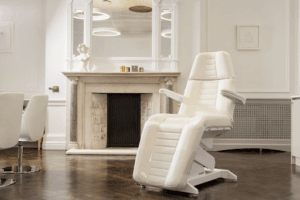
Dr Haus Dermatology is a private dermatology clinic established over 15 years ago on Harley Street, London, providing expert care for both medical and aesthetic skin concerns.
Importantly, laser treatment can be safe and effective for all skin types, including skin types 1 to 6, when the correct laser, settings, and treatment plan are chosen.
A common misconception is that laser is not suitable for darker skin types, but this is not the case when treatment is properly selected and medically led.
The clinic takes a consultation-led approach, with a focus on accurate diagnosis, personalised treatment planning, and long-term skin health.
All patients are assessed and treated by experienced Dermatologists, ensuring care is medically led from the outset. The team manages a wide range of skin concerns, from common and complex dermatological conditions to skin cancer checks and aesthetic treatments, always prioritising safety and evidence-based care.
Patients can find out more about the Dermatologists behind their care on the Meet the Team page, or make an enquiry via the Contact Us page, or alternatively, chat to us now via WhatsApp. Dr Haus Dermatology welcomes patients from London and across the UK.
If you are struggling with acne scars or persistent skin texture issues, a consultation with a dermatologist can help determine the most effective treatment.
Visit Dr Haus Dermatology to explore advanced laser treatments tailored to your skin.


